ABOUT US
Since our consecration, Edward and Alexandra Lodge No. 3171 has stood for fellowship, charity and the steady pursuit of self-improvement.
OUR HISTORY
The idea had its roots a few years earlier: with preparations in hand for the coronation of King Edward VII and Queen Alexandra in 1902, a number of prominent Hertfordshire brethren were inspired to found a Lodge bearing the royal title. Early in 1906, a group led by W.Bro. Frederick C. Foster, W.Bro. S.A. Weeden and W.Bro. Phineas Phillips met to found the new Lodge in the Province. The Cheshunt Lodge No. 2921 agreed to sponsor the petition to Grand Lodge, continuing a proud Hertfordshire lineage tracing back through the James Terry Lodge No. 2372 and the King Harold Lodge No. 1327. In tribute to His Majesty King Edward VII and Her Majesty Queen Alexandra — whose reign was held to exemplify the Masonic virtues of Loyalty and Charity — the new Lodge took their names. Numbered 3171 on the register of the United Grand Lodge of England, its Warrant was dated 24th May 1906, and it was consecrated on 19th October 1906 at the Frascati Restaurant, Oxford Street, London. A telegram received during the ceremony read: "Am commanded by the King to thank the members of the Edward and Alexandra Lodge for their good wishes" — signed Ponsonby.
What follows is the story of the years since — through changes of meeting-place, two World Wars, and generations of Brethren who have called the Edward and Alexandra their Lodge.
OUR STORY
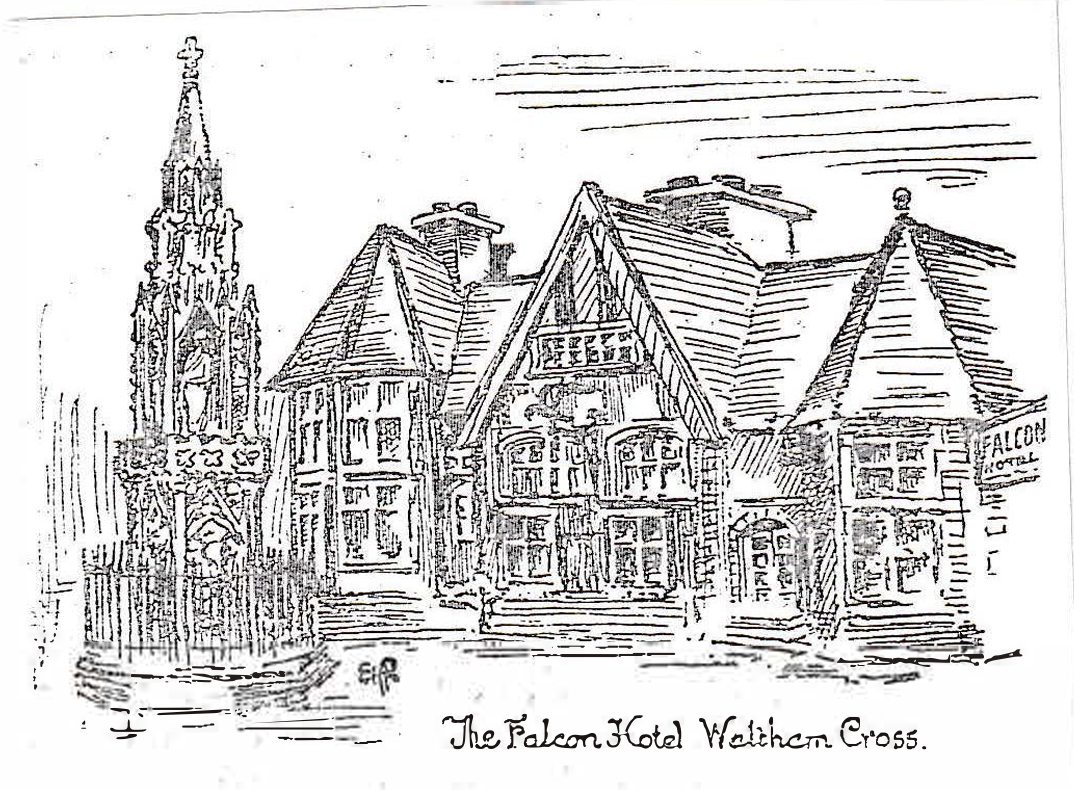
The Lodge's first regular meeting was held on 27th October 1906 at the Falcon Hotel, Waltham Cross. In the years that followed it met at the Red Lion Hotel in High Barnet, the Essex Arms in Watford, and the Salisbury Hotel, before returning to the Red Lion in 1932. Membership grew steadily through the 1920s, and by 1927 the Lodge list numbered 92; by 1932 it reached its highest-ever figure of 97. In 1928 the Lodge sponsored the formation of the Castle Bar Lodge No. 5036, several of whose Masters have been E. and A. members or past members.
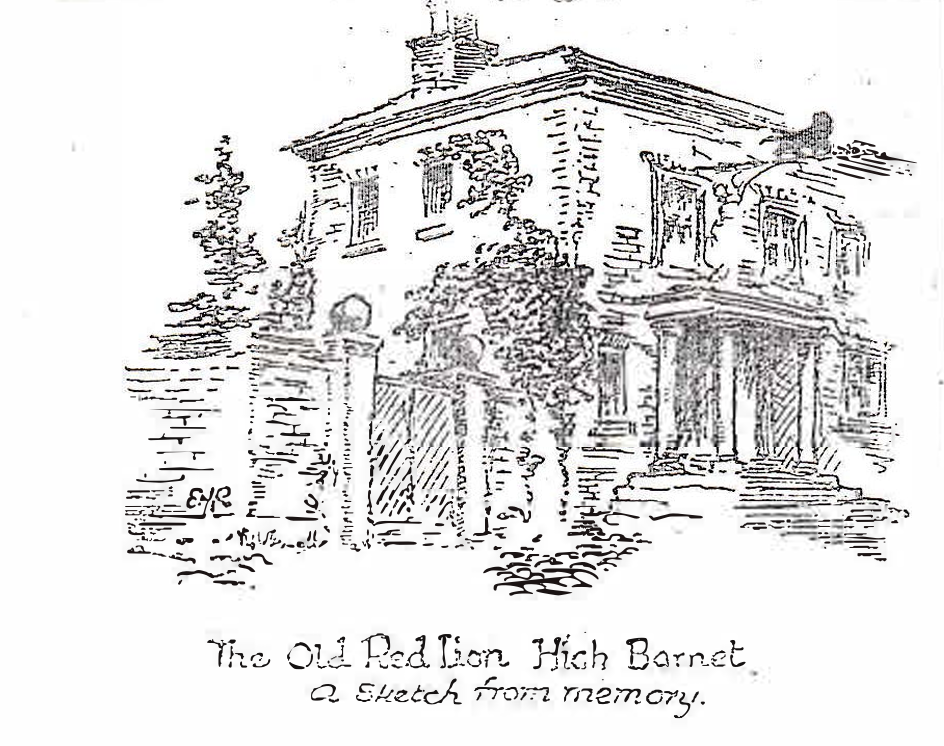
On 28th November 1931 the Lodge celebrated its Silver Jubilee at the Frascati Restaurant, Oxford Street — the same venue as its consecration twenty-five years earlier — with 106 Brethren present, including Grand Lodge and Provincial Grand Lodge officers. The following March, the Brethren voted unanimously that the Lodge should qualify as a Hall Stone Lodge, in recognition of its support for the building of Freemasons' Hall in London as a memorial to Brethren who served in the First World War.
When war came again in September 1939, the Lodge's Election Meeting was suspended by order of the Grand Lodge of England, but by October the Brethren had resumed, electing Bro. Percy N. Robinson as Master before 62 visitors and Brethren. Throughout the war years, meetings continued at various venues, mostly in London, despite the air raids — on occasion beginning as early as 11.30am. In March 1945 a Lodge of Instruction was formed under the Lodge's sanction; it has met regularly ever since, celebrating its 1,000th meeting in November 1975. The Lodge met by dispensation at the Holborn Restaurant, London, before finally settling at its present home, The Halsey Masonic Hall, Watford, on 6th March 1947.
In 1946 members of the Edward and Alexandra were instrumental in founding the Beacon Light Lodge No. 6399 — nine of its founders were E. and A. members, and five E. and A. Brethren went on to serve as its Master.
The Lodge's Diamond Jubilee was celebrated on 15th September 1956 at the Criterion Restaurant, Piccadilly, with the Provincial Grand Master, R.W. Bro. Dr Joseph Moffatt, in attendance among 87 Brethren and visitors. In 1967 the Lodge joined the Association of Taylor's Working, of which it remains a member today.
The Edward and Alexandra is a Hall Stone Lodge of the Masonic Million Memorial Fund, a Founding Lodge of the Freemasons' Hospital, a Patron of the Masonic Benevolent Association, a Grand Patron of the Royal Masonic Hospital, a Life Governor of the Royal Masonic Institute for Boys, and a Vice-Patron of the Royal Masonic Institute for Girls — a record of charitable giving that has run alongside the Lodge's fellowship since its earliest years.
This account draws on the Lodge's own written history, kept by W.Bro. David Turner, Secretary of the Lodge, in 1996 — itself building on notes first set down by W.Bro. Cyril Hollamby Robinson in 1976.
A LODGE TREASURE
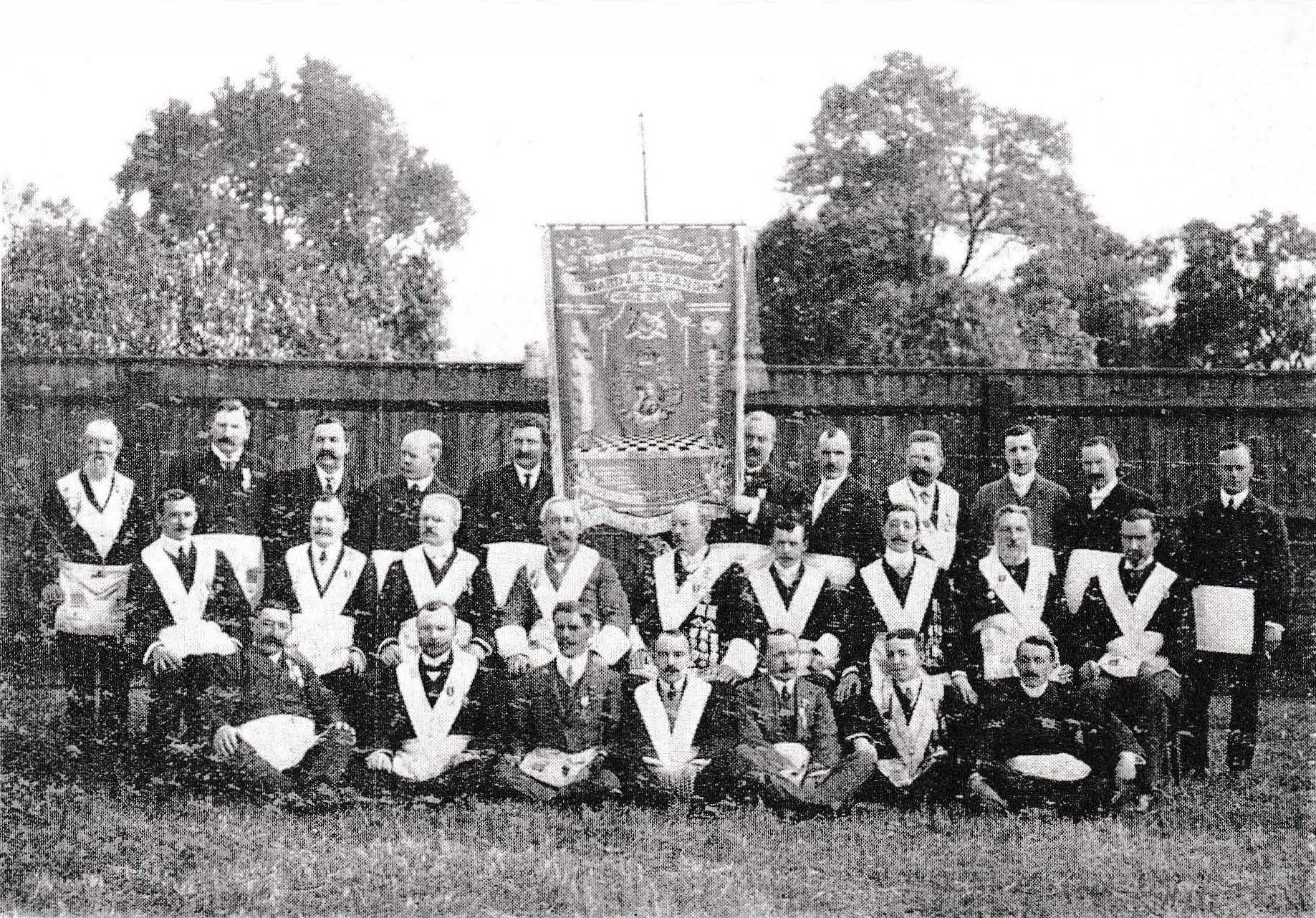
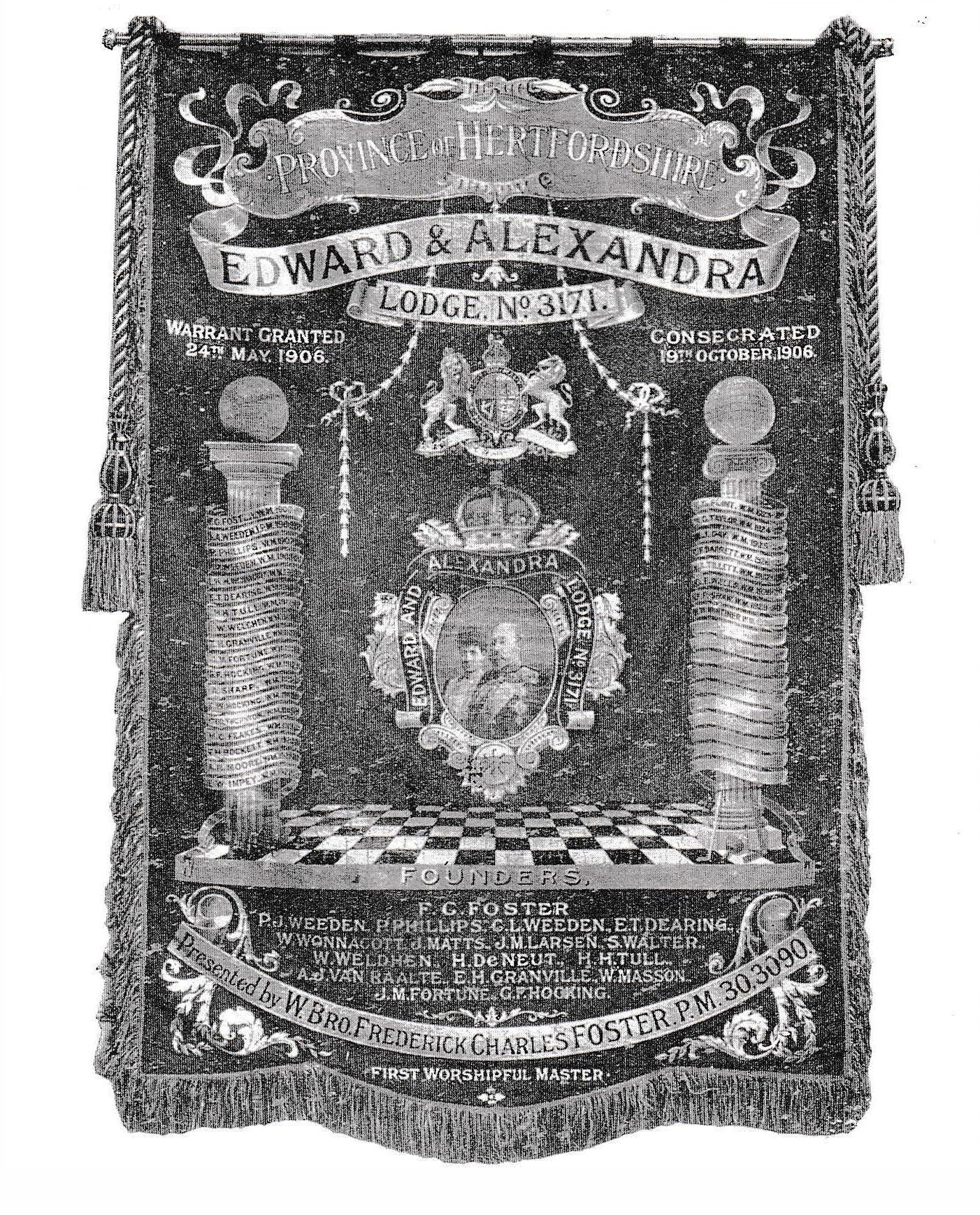
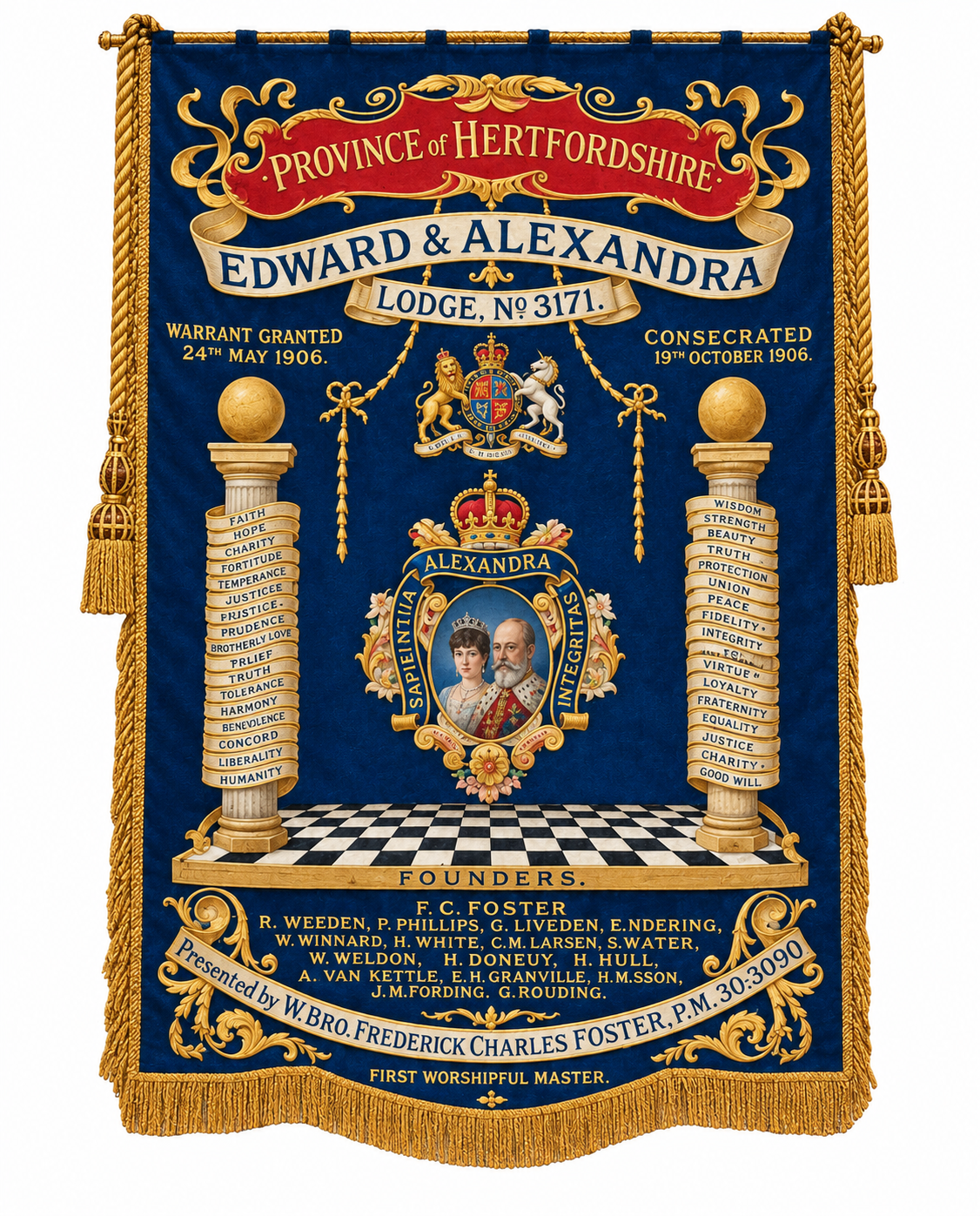
The Lodge's original banner was donated in 1906 by its first Master, W.Bro. Frederick Foster. It depicted portraits of King Edward VII and Queen Alexandra, the royal coat of arms — permission for which was granted by the Palace alongside the Lodge's warrant — the square, level and compasses, the Volume of the Sacred Law, and the smooth and rough ashlars, rather than the more traditional Two Pillars of the temple. It also carried a list of the Lodge's patronages at the time. Sadly, the original was lost during the Second World War; a photograph of it survives in the Lodge's centenary brochure, pictured behind the founders.
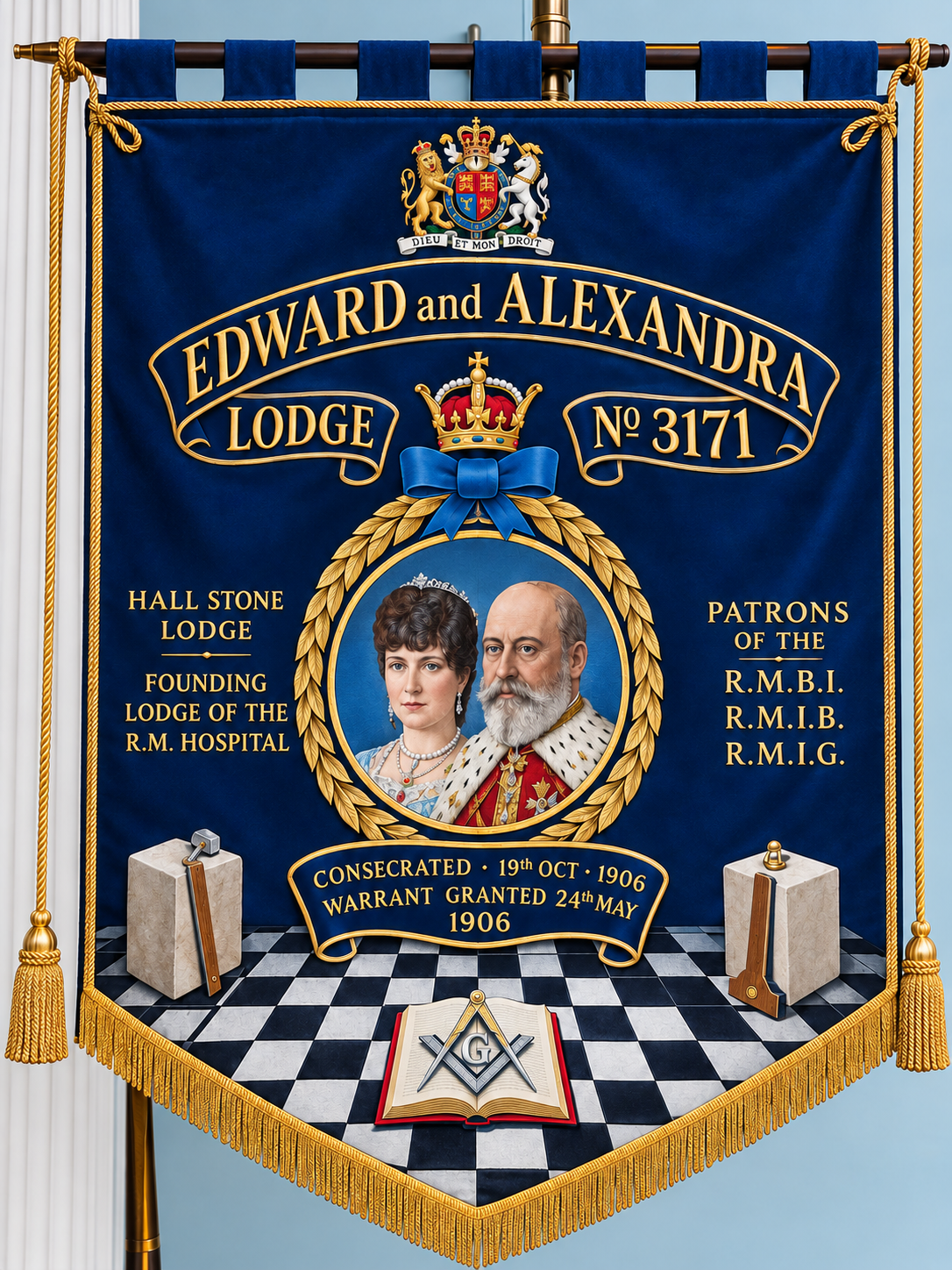
A new banner was dedicated on 19th June 1976, presented by W.Bros. C.H. Robinson and R.G. Barrett. It too bears the royal coat of arms, with a central panel depicting the King and Queen within a wreath of laurels, surmounted by a crown. The banner was re-dedicated at the Lodge's centenary meeting on 11th November 2006.
THROUGH THE YEARS
WHAT WE STAND FOR
Acting with honesty and moral uprightness, in the Lodge and in daily life.
Giving generously of our time and means to those in need, near and far.
Building lasting friendships built on mutual respect and trust.
Striving continually to become better men, brothers and citizens.
HONOUR ROLL
With gratitude to those who have served in the Chair of King Solomon and guided our Lodge.